
Google Analytics 4 in 2026: Latest Updates Everybody Should Know
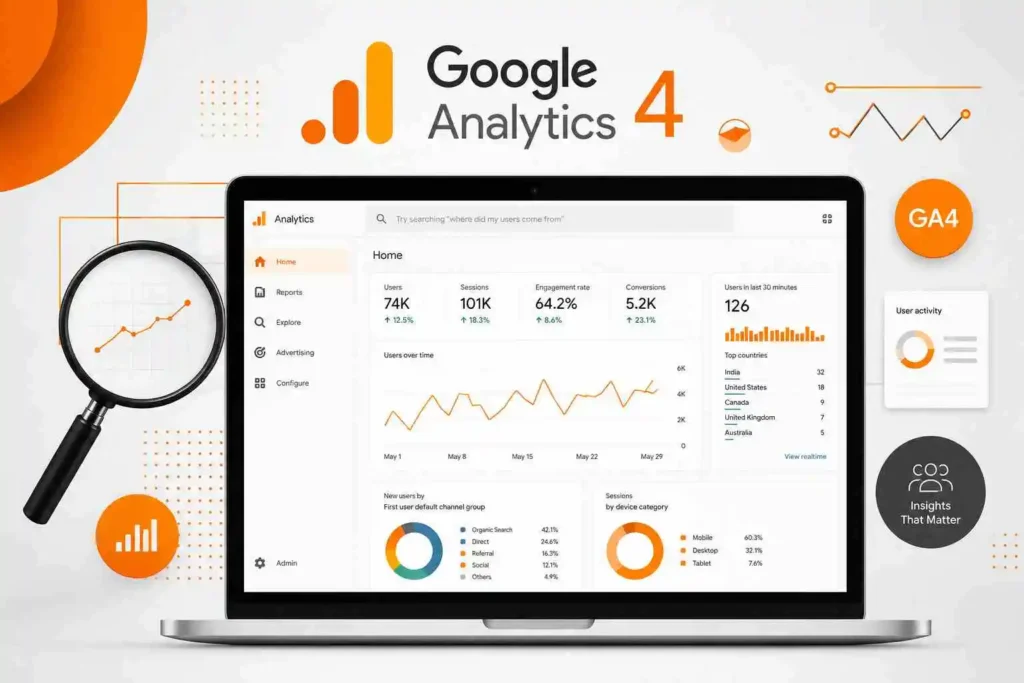
Digital marketing has entered an era where data is no longer just a reporting tool. It has become the foundation of every important marketing decision. Whether you’re improving your website’s SEO, running Google Ads, publishing content or analysing customer journeys, the quality of your data directly influences the quality of your results.
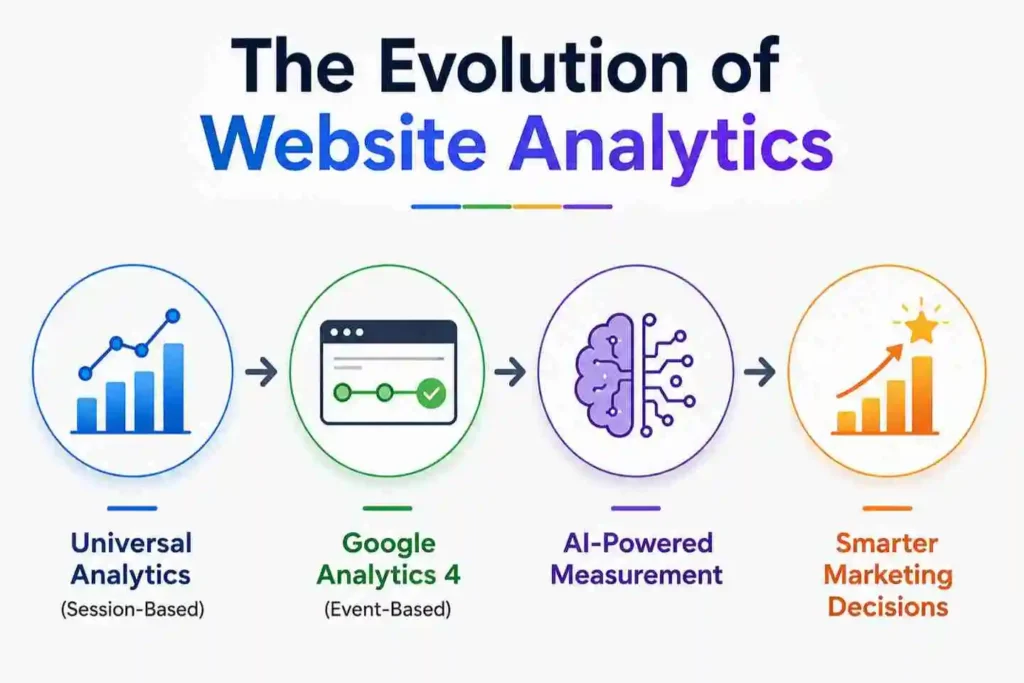
This is one of the biggest reasons why Google Analytics 4 (GA4) continues to evolve. Unlike Universal Analytics, which mainly measured sessions and pageviews, GA4 focuses on user interactions through an event-based model. Every click, scroll, purchase, video play or form submission helps build a clearer picture of how visitors engage with your website.
Google has continued refining the platform with several important updates throughout 2025 and early 2026. Many of these changes were announced quietly in Google’s developer documentation. Although they appear technical at first glance, they have practical implications for marketers who rely on accurate reporting, better attribution and cleaner conversion data.
In this article, we’ll break down the latest Google Analytics 4 updates, explain what they actually mean for marketers and explore how these improvements support SEO, AI-driven marketing and modern measurement strategies.
Related Articles
Before reading further, you may also like:
Why Google Analytics 4 Keeps Evolving
Marketing has become significantly more complex than it was just a few years ago.
A potential customer might first discover your business through an AI Overview in Google Search. A few days later they may watch your YouTube video, return through an email campaign and finally complete a purchase after clicking a Google Ads campaign.
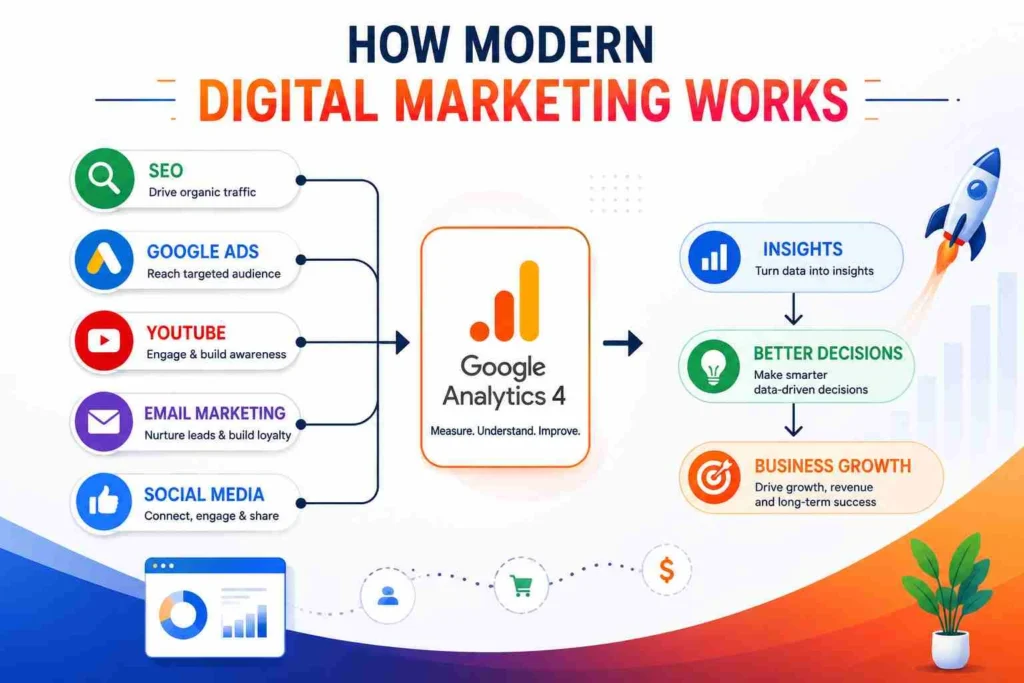
Traditional analytics struggled to connect these interactions. Google Analytics 4 was designed to solve this challenge by measuring events instead of sessions, making it easier to understand the complete customer journey across multiple devices and marketing channels.
The recent updates continue moving in the same direction. Rather than introducing flashy reports, Google is improving how data is collected, validated and processed. Better measurement leads to better reporting. Better reporting leads to better marketing decisions.
Why This Matters
- More accurate attribution across multiple channels.
- Better understanding of user behaviour.
- Improved conversion tracking.
- Stronger support for AI-powered marketing.
- More reliable first-party data collection.
What’s New in Google Analytics 4?
Google introduced several updates between May 2025 and February 2026. Instead of looking at them individually, it helps to group them into four major improvements that directly affect measurement and reporting.
1. Better User and Session Tracking
One of the most useful updates came in February 2026, when Google added support for accepting client ID cookies and session ID cookies within the Measurement Protocol.
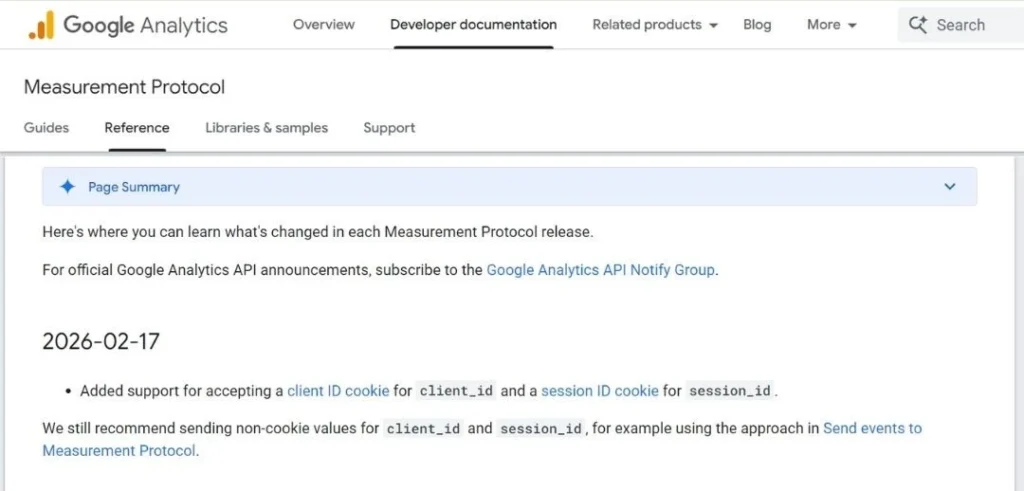
Google still recommends sending non-cookie values whenever possible. However, websites already using cookie-based implementations now have greater flexibility without significantly changing their existing setup.
Another improvement allows session_id and session_number to match the format used by Google Tag Manager’s built-in variables. This creates better consistency between different tracking systems.
Why It Matters
- Cleaner attribution reports.
- More consistent user identification.
- Better integration with CRM systems.
- Improved server-side tracking.
- Reduced reporting discrepancies.
Instead of treating the same visitor as multiple users, GA4 can now maintain a more consistent customer journey across different tracking environments. For businesses running performance marketing campaigns, this means greater confidence in conversion reporting.
2. Richer Event Data Collection
Google also expanded the type of information that marketers can send through the Measurement Protocol.
GA4 now supports additional device information, including:
- Device brand
- Device model
- User agent
- Device attributes
It also introduced support for:
user_locationip_override- Event-level timestamp overrides
- User property timestamps
These additions provide much richer context around every interaction collected inside Google Analytics.
For marketers, this means analytics becomes more than simply counting visitors. It becomes a way to understand how different devices, locations and user environments influence engagement and conversions. Imagine discovering that visitors using specific mobile devices consistently abandon your checkout page. Without richer device reporting, identifying that trend would be far more difficult. Small improvements in measurement often lead to much bigger improvements in optimisation.
💡 Digital Marketer’s Insight
One thing I’ve noticed while following Google’s analytics updates is that the company is no longer focused on collecting more data. Instead, it’s focused on collecting better-quality data.
That shift reflects the wider direction of digital marketing. AI-powered advertising, predictive analytics and automated bidding all depend on reliable signals. Cleaner data helps every marketing decision become more informed.
3. Improved Event Builder and Better Validation
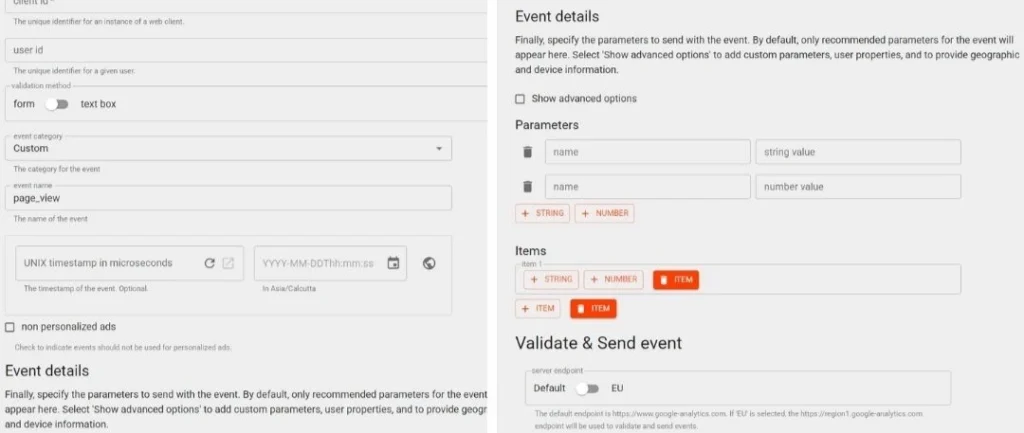
Another update that deserves attention is Google’s continued improvement of the GA4 Event Builder. If you’ve ever worked with the Measurement Protocol, you’ll know that testing events before sending them to production can save hours of troubleshooting later.
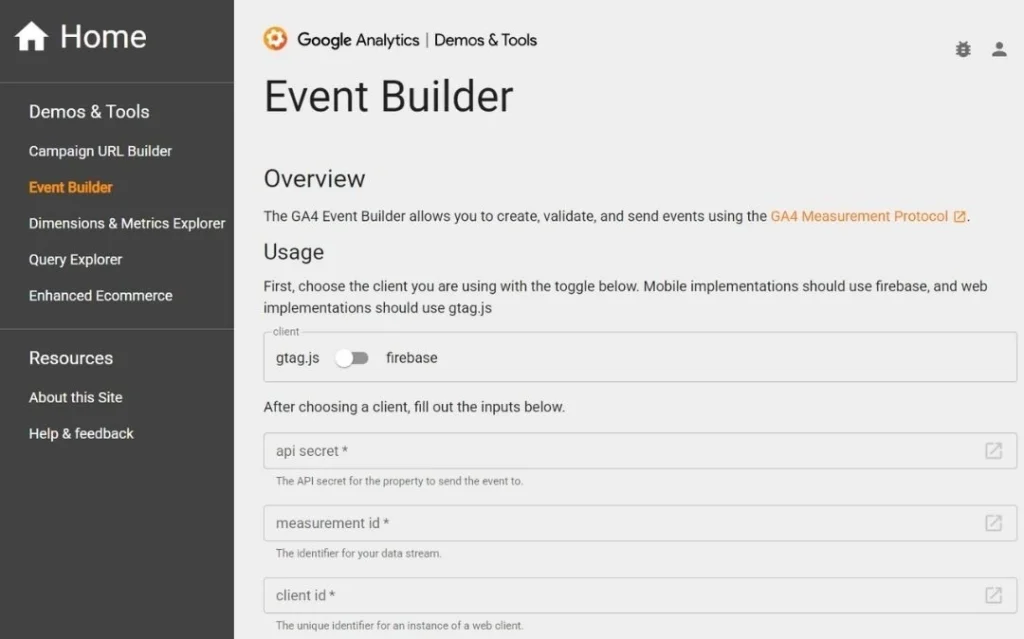
Throughout 2025, Google expanded the Event Builder with several practical improvements. Marketers and developers can now test events using richer data inputs such as device information, geographic details, event-level timestamps and dedicated EU collection endpoints. Google also updated the validation endpoint to support newer event types including in_app_purchase for App streams, making testing more reliable before implementation.
Although these improvements mainly target developers, they directly benefit marketers. Cleaner implementations mean fewer tracking errors, more accurate reports and greater confidence when analysing campaign performance.
Why It Matters
- Easier debugging before events go live.
- Better data accuracy.
- Reduced implementation errors.
- More reliable conversion reporting.
- Improved collaboration between marketers and developers.
What These Updates Mean for Digital Marketers
Most GA4 release notes are written for developers. As marketers, however, we should focus on a much simpler question:
How do these updates improve our marketing decisions?
The answer lies in better data quality.
Accurate analytics makes it easier to identify which campaigns generate qualified traffic, which landing pages convert best and where users drop off during their journey. Instead of relying on assumptions, marketers can optimise strategies using real behavioural insights.
These updates also strengthen several important marketing activities.
For SEO
As search behaviour evolves through AI-powered experiences, understanding user engagement becomes just as important as measuring traffic. Metrics like scroll depth, engagement time, returning users and conversion events provide a clearer picture of whether your content is genuinely satisfying search intent.
If you haven’t already, you can also read my article on How Google AI Search Is Changing SEO and Website Traffic, where I explain why engagement metrics are becoming increasingly important in an AI-first search ecosystem.
For Performance Marketing
Modern advertising platforms rely heavily on machine learning. Whether you’re running Google Ads, Performance Max or Demand Gen campaigns, accurate conversion data helps Google’s algorithms optimise bids and audience targeting more effectively.
Google reinforced this direction during Google Marketing Live 2026, where AI-powered campaign optimisation became one of the central themes. Reliable GA4 data plays a critical role in making those AI systems more effective.
For Content Marketing
Traffic alone no longer tells the complete story. A blog post attracting 10,000 visitors each month isn’t necessarily successful if readers leave after a few seconds.
GA4 allows content marketers to analyse how visitors interact with articles, where they stop reading and which pages encourage further exploration across the website.
| Traditional Analytics | Google Analytics 4 |
|---|---|
| Sessions | Events |
| Pageviews | User interactions |
| Basic reports | Cross-platform insights |
| Historical data | Predictive analytics |
| Limited attribution | Better customer journey analysis |
Practical Applications of GA4
The latest GA4 improvements benefit almost every type of business.
Bloggers and Publishers: Measure which articles generate meaningful engagement instead of simply attracting clicks.
E-commerce Stores: Track product views, checkout behaviour and purchase events more accurately across devices.
Lead Generation Websites: Understand where users abandon enquiry forms and optimise landing pages accordingly.
YouTube Creators: If you’re using YouTube to drive traffic to your website, GA4 helps measure what happens after viewers click your links.
This complements the strategies discussed in my article on YouTube Keyword Research in 2026, where I explain why attracting the right audience matters more than simply increasing views.
My Perspective as a Digital Marketer
One trend I’ve consistently noticed across SEO, analytics and performance marketing is that the conversation is slowly shifting away from how much traffic we generate towards how meaningful that traffic actually is. It’s easy to celebrate rising visitor numbers, growing impressions or higher click-through rates. Those metrics certainly matter. Yet they only tell part of the story.
The real value begins after someone lands on your website.
Do they continue reading?
Do they explore other pages?
Do they trust your content enough to subscribe, enquire or make a purchase?
That’s where Google Analytics 4 becomes incredibly valuable.
From my perspective as a digital marketer, the latest GA4 updates aren’t simply technical improvements. They reflect Google’s broader vision of helping businesses measure complete customer journeys rather than isolated website visits.
As artificial intelligence continues influencing search, advertising and marketing automation, reliable first-party data will become even more important. Businesses that invest in understanding user behaviour today will be far better positioned to adapt to tomorrow’s digital landscape.
Conclusion
Google Analytics 4 continues to mature into much more than a website analytics platform. The latest updates introduced throughout 2025 and early 2026 demonstrate Google’s commitment to improving data quality, privacy, measurement flexibility and cross-platform reporting. While some of these improvements appear highly technical, their impact reaches every marketer who depends on reliable reporting to make informed decisions.
Whether you’re improving your SEO strategy, running paid advertising campaigns, publishing long-form content or measuring customer journeys, accurate analytics provides the foundation for continuous growth. Technology will continue evolving. AI will continue transforming search and advertising. Yet one principle is unlikely to change: better decisions come from better data.
Learning how to collect, understand and act on that data will remain one of the most valuable skills any digital marketer can develop.
😊 Thank You for reading! 😊
📖 Learn More About Me
If you’re interested in learning more about my background, projects and journey in digital marketing, feel free to learn more about Anupam Das. I regularly share practical insights, industry observations and hands-on learning experiences in SEO, AI Search, Google Analytics, Performance Marketing and Marketing Automation.
🚀 Explore My Digital Marketing Services
Looking to improve your online visibility through SEO, content marketing, website optimization or AI-driven digital strategies? Explore my Digital Marketing Services to see how I can help your business grow.
📩 Let’s Connect
Have a question about Google Analytics 4, SEO or digital marketing? Get in touch for SEO and digital marketing consulting. I’d be happy to discuss your goals and explore how I can help.
🤝 Connect With Me
I regularly publish practical insights on SEO, Google Analytics, AI Search, Performance Marketing and Digital Marketing. If you’d like to follow my journey or get in touch, I’d love to connect.
🌐 Website: https://dasanupam.com/
💼 LinkedIn: https://www.linkedin.com/in/digi-anupam/
📧 Email: [email protected]